
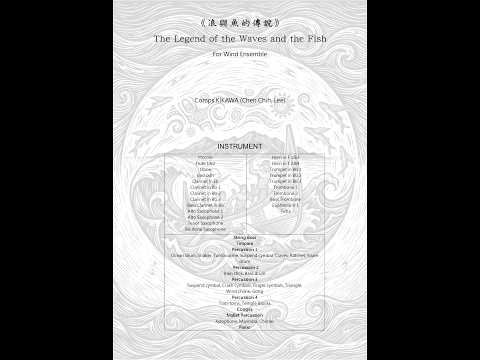


《浪與魚的傳說》The Legend of the Waves and the Fish For Wind ensemble-KIKAWA
Orchestra Hard
$60.00
- Performance Video
- Difficulty: Hard
- 88 Pages
Key Information
- Instrument 1
- Orchestra
- Pages
- 88
- Difficulty
- Hard
- Type
- 1 Staff
- Instrumentation
- Orchestra
- Lyrics
- Not included
- Chord
- Not included
- Key
- B♭ major (3 key changes)
- Time signature
- 3/4 (3 meter changes)
- Tempo
- 70~120bpm
- Measures
- 228 measures
- Range
- E1 – A♯7
- Sections
- solo · A · solo · H · solo · J
Description
曲目解說
本曲以蘭嶼為創作發想,透過音樂描繪島嶼、海洋與族人生活之間緊密而深刻的連結。樂曲開端由上低音號奏出悠遠旋律,彷彿自海上遠望島嶼,隨著木管聲部的加入,視角逐漸貼近海岸,展現蘭嶼純淨而壯麗的自然風貌。
音樂隨後轉入充滿律動的段落,描寫勇士們齊心打造拼板舟的過程,旋律中流露勞動的喜悅與團結精神,並在壯闊的樂段中寄託對祖靈庇佑的祈願。
接續的祭典段落,以哼唱與拍手會歌的節奏意象,呈現達悟族慎重而虔誠的儀式氛圍,祈求出海平安。
出海捕魚段落則以 10/8 拍描繪海面的起伏不定,木管跳躍的音程象徵飛魚穿梭浪間,隨著海象驟變,音樂轉為激烈,刻畫勇士與風浪搏鬥的驚險場景。
終章音樂逐漸沉澱,以莊嚴而溫暖的旋律迎接勇士歸來,在安靜而深遠的餘韻中,傳達對大自然的敬畏與感恩,並寄寓珍惜土地、守護海洋的期盼。
Program Note Draft
This work is inspired by Lanyu (Pongso no Tao), portraying through music the profound relationship between the island, the ocean, and the life of its people. The opening unfolds with a broad, lyrical theme in the euphonium, as if viewing the island from afar across the sea. Gradually, the woodwinds join and guide the listener closer to the shoreline, revealing the purity and grandeur of the island’s natural landscape. The music then shifts into a lively, rhythmic section depicting the warriors working together to build a traditional tatala canoe, expressing both the joy of communal labor and the spirit of unity, while a more expansive passage reflects prayers for the blessing and protection of ancestral spirits.
The atmosphere soon becomes solemn as the music enters a ceremonial scene, using humming and clapping-like rhythmic gestures to evoke ritual songs, symbolizing sincere prayers for a safe voyage. The fishing expedition is portrayed in an asymmetrical 10/8 meter, capturing the unsteady motion of the sea. Leaping intervals in the woodwinds suggest flying fish darting above the waves, while the music intensifies as the sea grows hostile, illustrating the warriors’ struggle against the forces of nature. In the final section, the music settles into a dignified and warm tone, welcoming the warriors’ return. Rather than a triumphant conclusion, the work ends in a calm and reverent atmosphere, expressing gratitude and respect for nature, and conveying a hope for harmony, preservation, and continuity between humanity and the sea.
$60.00
