
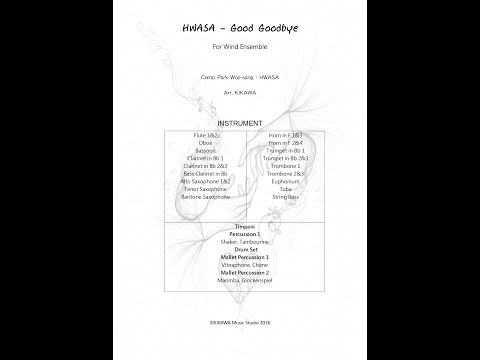


Good Goodbye For Wind Ensemble-HWASA
オーケストラ 中級
$15.00
- 演奏動画
- 難易度: 中級
- 35ページ
主要情報
- 楽器 1
- オーケストラ
- ページ数
- 35
- 難易度
- 中級
- 楽譜の種類
- 1段楽譜
- 編成
- オーケストラ
- 歌詞有無
- 無し
- コード有無
- 無し
- 調
- F 長調
- 拍子
- 4/4
- テンポ
- 60bpm
- 小節
- 77小節
- 音域
- F1 – A7
- 構成
- A · solo
内容
曲目解說
《Good Goodbye》原為韓國歌手 HWASA 所演唱的抒情作品,描寫一段感情走向終點時,夾雜著不捨、回憶與心痛,卻仍希望對方能夠幸福的複雜心境。「Good Goodbye」並非灑脫的告別,而是一種試圖讓離別變得溫柔的努力。
本管樂改編版本保留原曲細膩而內斂的情感核心,並將人聲旋律轉化為器樂之間的情緒對話。透過管樂團豐富而層次分明的音色配置,放大原曲中隱而未宣、卻始終流動的情感。
樂曲以 Ballad(♩=100) 的速度展開,開頭由低音聲部與柔和的木管音色鋪陳出靜謐的氛圍,象徵回憶初現時的平靜表象。旋律線條克制而留有餘白,使聽者彷彿置身於一段尚未說出口的告別。
進入主題後,旋律在木管與薩克斯風聲部之間交替呈現,模擬人聲呼吸般的自然起伏。和聲刻意避免過於厚重,保留透明度,讓情感停留在「尚未崩潰、卻已悄然裂開」的狀態。
中段隨著樂器編制逐步擴張,銅管聲部加入,音量與密度緩慢堆疊,象徵情緒逐漸累積至臨界點。此處並非爆發式的高潮,而是內心反覆掙扎後的坦然——對離別已成事實的接受。
在後段高潮中,旋律以較寬廣的音域展開,由全團齊奏推向情感頂峰,卻隨即收斂,刻意避免勝利式或戲劇化的結尾。最終段落再度回歸柔和而透明的音色配置,彷彿將話語輕輕放下,留下的是餘韻,而非句點。
Program Note
Good Goodbye was originally a ballad performed by Korean singer HWASA, portraying the complex emotions that arise at the end of a relationship—lingering affection, memories, and heartache, intertwined with a sincere wish for the other person’s happiness. Rather than a carefree farewell, Good Goodbye represents an attempt to part gently, with honesty and tenderness.
This wind ensemble arrangement preserves the original song’s delicate and introspective emotional core, transforming the vocal melody into a dialogue of emotions shared among instruments. Through the rich and carefully layered colors of the wind ensemble, the arrangement amplifies the subtle, unspoken feelings that flow beneath the surface of the original work.
The piece opens at a ballad tempo (♩ = 100), with low voices and soft woodwind textures establishing a quiet, restrained atmosphere—symbolizing the calm that accompanies the first emergence of memories. The melodic lines are intentionally understated, leaving space and silence, as if the listener were standing within a farewell that has yet to be spoken.
As the main theme unfolds, the melody alternates between woodwinds and saxophones, imitating the natural rise and fall of human breath. The harmonic texture avoids excessive weight, maintaining transparency so that the emotion remains in a state of quiet fracture—unbroken, yet no longer whole.
In the middle section, the gradual expansion of instrumentation and the entrance of the brass slowly increase both volume and density, representing emotions building toward a critical point. This moment is not conceived as an explosive climax, but rather as a calm acceptance reached after inner struggle—the recognition that the farewell has become inevitable.
In the latter climax, the melody unfolds across a broader range and the full ensemble briefly unites to reach the emotional peak, only to withdraw shortly thereafter. By avoiding a triumphant or overtly dramatic conclusion, the piece ultimately returns to a gentle and transparent sonority. The final moments feel as though words are quietly laid to rest, leaving behind resonance and reflection—rather than a definitive ending.
곡 해설
**〈Good Goodbye〉**는 한국 가수 HWASA가발표한 발라드 곡으로, 한 관계의 끝자락에서 느껴지는 복합적인 감정을 담고 있다. 미련과 추억, 그리고 아픔이 교차하는 가운데서도 상대방의 행복을 진심으로 바라는 마음을 그려내며, 이 곡이 말하는 ‘Good Goodbye’는 결코 가볍거나 쿨한 이별이 아닌, 이별을 최대한 부드럽게 받아들이려는 노력에 가깝다.
본관악합주 편곡은 원곡이 지닌 섬세하고 내면적인 감정의 핵심을 유지한 채, 보컬 선율을 악기들 간의 감정적 대화로 재구성하였다. 관악합주의 풍부하고 층위가 분명한 음색을 통해, 원곡 속에 직접적으로 드러나지 않았던 감정의 흐름을 더욱 선명하게 확장해 나간다.
곡은 Ballad 템포(♩ = 100)로시작되며, 저음 성부와 부드러운 목관 음색이 조용하고 절제된 분위기를 형성한다. 이는 기억이 처음 떠오를 때의 고요한 상태를 상징하며, 선율은 의도적으로 여백을 남겨 아직 말해지지 않은 이별의 순간에 서있는 듯한 감각을 전달한다.
주제가 제시되면 선율은 목관과 색소폰 성부 사이를 오가며 등장하여, 인간의 호흡과도 같은 자연스러운 흐름을 만들어 낸다. 화성은 지나치게 두터워지지 않도록 조절되어, 감정이 완전히 무너지기 직전—이미 금이 가 있지만 아직 유지되고 있는 상태에 머무른다.
중반부에서는 편성의 점진적인 확장과 함께 금관 악기가 더해지며, 음량과 밀도가 서서히 증가한다. 이는 감정이 임계점에 이르기까지 축적되는 과정을 상징하지만, 폭발적인 클라이맥스보다는 내면의 갈등 끝에 도달한 담담한 수용의 순간을 표현한다. 이별이 이미 피할 수없는 현실임을 받아들이는 장면이다.
후반부의 클라이맥스에서는 보다 넓은 음역에서 선율이 펼쳐지며 전 합주가 감정의 정점에 도달하지만, 곧절제된 방향으로 수렴된다. 승리감이나 과도한 극적 효과를 의도적으로 피함으로써, 음악은 다시 투명하고 부드러운 음색으로 돌아간다. 마지막은 마치 말을 조용히 내려놓듯 마무리되며, 분명한 결말이 아닌 깊은 여운을 남긴다.
$15.00
